A senior government minister in Singapore has issued a warning to company directors that they face prosecution for health and safety failures, as the government considers a new Approved Code of Practice (ACoP) on directors’ duties.
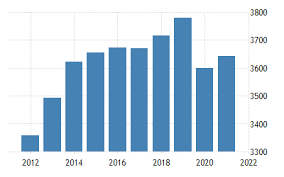
A spike in recent worker deaths in Singapore (31 in the first seven months of this year) will lead to government considering the imposition of a code of practice on company directors. Singapore’s working population is approx 3.6m and the death rate per 100,000 would be 0.83 were there to be no more this year.
Compare this with the current reducing trend of work related fatalities in the UK which was 0.41 for the previous year.
Does this mean that the UK health and safety regime and the duties of UK directors is about right?
If you wish to discuss whether or not your company is getting it right, please get in touch for a no-nonsense preagmatic chat.
As we learn to live safely with coronavirus (COVID-19), there are actions we can all take to help reduce the risk of catching COVID-19 and passing it on to others. These actions will also help to reduce the spread of other respiratory infections, such as flu, which can spread easily and may cause serious illness in some people.
COVID-19, along with many other respiratory infections such as influenza (flu), can spread easily and cause serious illness in some people. You may be infected with a respiratory virus such as COVID-19 and not have any symptoms but still pass infection onto others.
The risk of catching or passing on COVID-19 is greatest when someone who is infected is physically close to, or sharing an enclosed and/or poorly ventilated space with, other people. When someone with a respiratory viral infection such as COVID-19 breathes, speaks, coughs or sneezes, they release small particles that contain the virus which causes the infection. These particles can be breathed in or can come into contact with the eyes, nose, or mouth. The particles can also land on surfaces and be passed from person to person via touch.
There are simple things you can do in your daily life that will help reduce the spread of COVID-19 and other respiratory infections and protect those at highest risk. Things you can choose to do are:
Get vaccinated.
Let fresh air in if meeting others indoors.
Practise good hygiene:
wash your hands
cover your coughs and sneezes
clean your surroundings frequently
Wear a face covering or a face mask.
Face coverings and face masks can help reduce the chance of you spreading infection to others, especially in crowded and enclosed spaces, and may protect you from becoming infected by some respiratory viruses.
If you have symptoms of a respiratory infection, such as COVID-19, and you have a high temperature or do not feel well enough to go to work or carry out normal activities, you are advised to try to stay at home and avoid contact with other people.
Ventilation is the process of bringing in fresh air from outside and removing indoor air, which may:
be stale
be hot and humid because of work machinery and processes
contain pollutants and other impurities
Improving the air
Now you know that making an improvement is good for everyone the first thing to do is
ASSESS
As part of your legal duty to provide sufficient fresh air, your workplace risk assessment should identify poorly ventilated work areas:
look for areas where there is no natural ventilation (open windows, doors, or vents) or mechanical ventilation (fans or ducts bringing air in from outside)
It may help to list areas in your workplace or use floor plans to record how areas are ventilated.
Remember to include changing rooms and areas used for breaks, such as canteens.
Talk with your team
Talking will help you assess the risk and put in effective measures to improve ventilation.
Questions to ask
How do we bring fresh air (ventilation) into our workplace?
Think about natural ventilation through windows, doors and vents you can open fully or partially
If we use mechanical ventilation, is it set correctly and do we maintain it?
How can we improve ventilation?
Think about areas that feel stuffy or smell bad – open windows, air vents and doors (not fire doors)
If we have recirculating systems, do we bring in some fresh air?
Are temperatures in the workplace comfortable?
Discussing the outcome of your risk assessment and the measures identified will also help them understand how they can play their part in improving ventilation at work.
It’s Chilly in here!
Don’t forget team members should not be exposed to uncomfortable draughts. For mechanical ventilation systems, it may be necessary to control the direction or speed of airflow.
Workstations should be moved or screened if necessary.
If your space is naturally ventilated, there are simple steps you can take to make sure your workplace has enough fresh air without opening windows wide and making it too cold:
partially opening windows and doors can still provide adequate ventilation
opening higher-level windows will create fewer draughts
using trickle vents rather than opening windows
Regularly air rooms that rely on natural ventilation, by opening windows and doors in between use.
From 6 April 2022 amended PPE regulations require employers to provide more of their workers with free PPE, if used.
Previously the 1992 PPE Regulations placed a duty on every employer in Great Britain to ensure that suitable PPE is provided to ‘employees’ who may be exposed to a risk to their health or safety while at work.
The new regulations, the Personal Protective Equipment at Work (Amendment) Regulations 2022 (PPER 2022), extends that duty to workers who generally have a more casual employment relationship and work under a contract for service, officially known as “limb (b) workers”.
As with employees, if PPE is required, employers must ensure that workers have sufficient information, instruction and training on its use. Workers will have the duty to use the PPE in accordance with their training and instruction, and ensure it is returned to the storage area provided by their employer. Where an employer finds PPE to be necessary after a risk assessment they have a duty to provide it free of charge.
The changes do not apply to those who have a ‘self-employed’ status.
PPE is defined in the PPER 1992 and is unchanged in the amendment. It means ‘all equipment (including clothing affording protection against the weather) which is intended to be worn or held by a person at work and which protects the person against one or more risks to that person’s health or safety, and any addition or accessory designed to meet that objective’
PPER 2022 restate the 1992 Regulations which say that PPE should be regarded as the last resort to protect against risks to health and safety. Engineering controls and safe systems of work should be considered first.
Many people now go about their day-to-day business as if Coronavirus is no longer a problem.
Many of us may be fully vaccinated (and some of us boosted as well) however, as the case rates fall and then rise parts of Europe are needing to re-introduce lockdowns. It is clear though that the continued high case rate in the UK means there is still a significant risk here. You can see this clearly on the chart below.
So please make sure your business doesn’t sucumb to CC (Covid Complacency) by remaining aware of the hazard of infection and transmission. Recognising the risk means we can continue to take sensible and pragmatic precautions as individuals such as good personal hygiene, face covering wear, ventilation and occasional testing.
The current legal requirements for business to comply with are quite limited and available from government. We are happy to advise on appropriate control measures for your particular business to help keep your employees and contractors safe and covid secure in the current climate where the risk remains significant and government takes a very light touch approach.
If you need advice on how to do so, please get in touch with us.
… in pain and misery for those who are injured and to businesses and the economy.
There was a decrease in the number of workers killed at work – down to 111 for 2019/2020 – but worryingly this figure has climbed again to 142 for the 12 months ending in March of this year. It is quite possible that due to the focus on Covid-19 arrangements and some time away on furlough that day-to-day safety practices may have lapsed.
On a brighter note, the UK still has the lowest rates of fatal work -related injuries in Europe.
In monetary terms the annual cost of all this work-related injury and ill heath was £16,200,000,000 about the cost of five new aircraft carriers.
Given these figures it must make sense for every business to make a modest financial investment into the health and safety of their employees.
Funding sensible and proportionate measures to keep workers and others affected by your work safe will produce dividends in the form of reduced incident rates, healthier workers and compliance with the law.
Don’t be complacent when it comes to your workplace health and safety. Contact us if you would like straight-talking pragmatic safety advice.
Take a look at the summary of the 2020 statistics from the HSE. See their PDF here. We will update with 2021 figures when they are available.
We were reading the Events Research Programme’s Phase I findings that were published last week – 25 June 2021. We found it interesting to note – especially if you watched it on television – that face coverings were apparently mandatory for the crowd at the FA Cup events – both at the semi and the final.
The report stated that there was 92% compliance (at the observed locations) while seated outdoors. We find this hard to believe having seen some of the TV coverage and it is unlikely that the program’s producer particularly wanted to focus on fans who removed coverings as they are more photogenic.
In defence of the organisers we can imagine how incredibly hard it must be to ask for compliance from large crowds when people will have strong opinions about the risk (fresh air everywhere), they are excited about the occasion, are with friends and have possibly consumed some alcohol.
Also, the report notes as outdoor occupancy levels rise compliance falls. Mob rule perhaps, feel free to discuss. In particular compliance with face coverings in hospitality areas was very, very low.
Indoor events seem to fare much better for compliance where observed possibly being as high as 98%.
There are clearly some significant challenges for mass gatherings if face coverings are going to continue to be a control measure for organisers to apply later in the year.
“Following advice from the Joint Biosecurity Centre and in the light of the most recent data, the UK Chief Medical Officers and NHS England National Medical Director agree that the UK alert level should move from level 4 to level 3.”
UK Chief Medical Officers and NHS England
This is terrific news and if we wish to continue enjoying the increased freedoms it allows, requires us to keep complying with the guidance and the remaining ‘light touch’ restrictions that are still in place.
Health and safety advice in the workplace is very similar in that there is a requirement on employers to comply with the current legislation. If you do this you can carry on without interference from the authorities and maintain a safe workplace, undertaking activities that do not put staff or others at undue risk. When workers, contractors or management try to cut corners (to beat a clock, or a budget, or a clause, or A DUTY) they put us all at risk of severe consequences.
Step four in the road map is more than a month away so keep up the compliance and do not get complacent – rather like attitudes to health and safety matters in the workplace.
Update 15 June:
The delay to the Roadmap’s Step 4 easing is now postponed to 19 July. So current restrictions are to stay in place for a further four weeks while the Delta variant is further understood and the vaccine roll out is further ramped up.
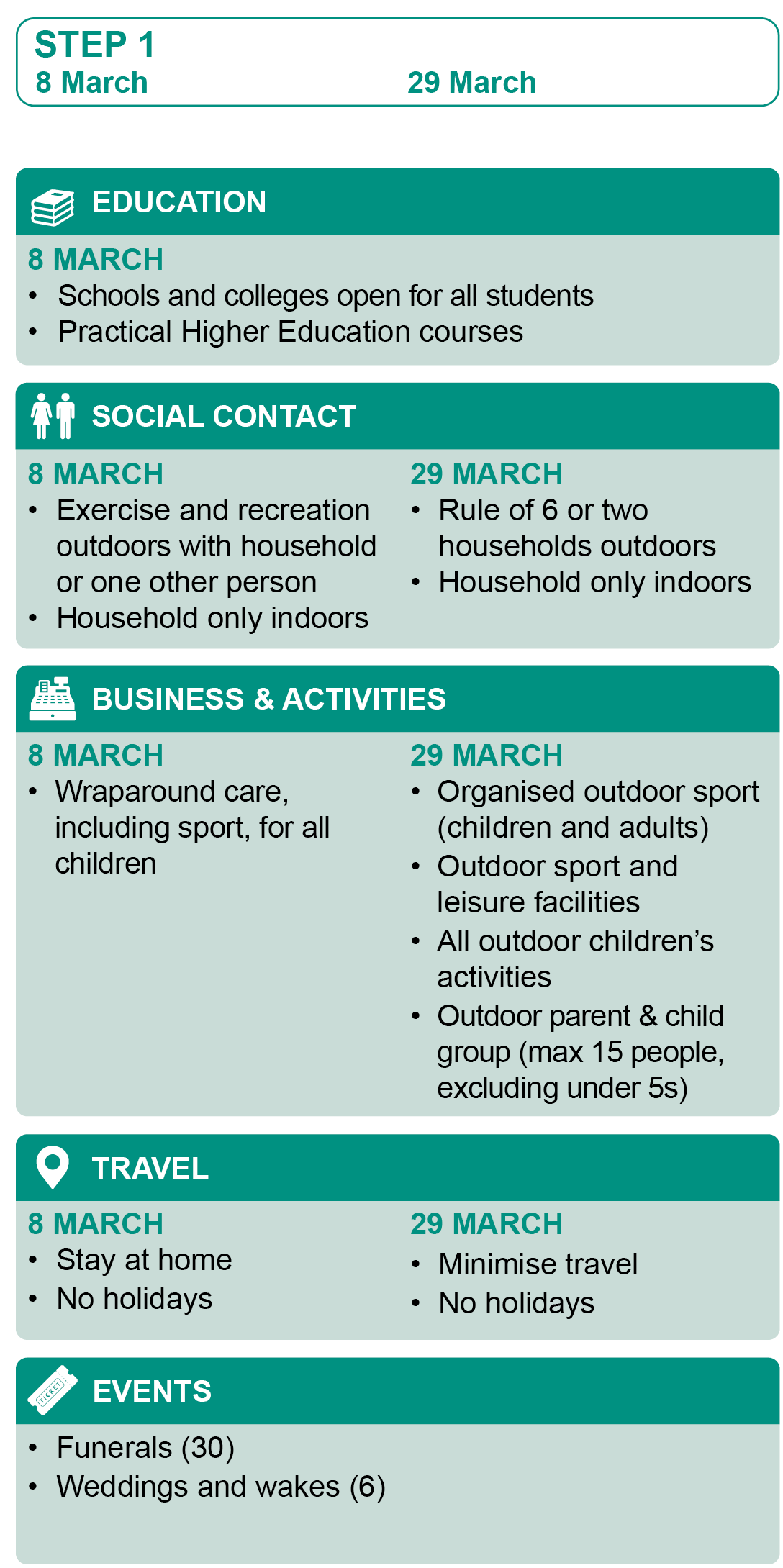
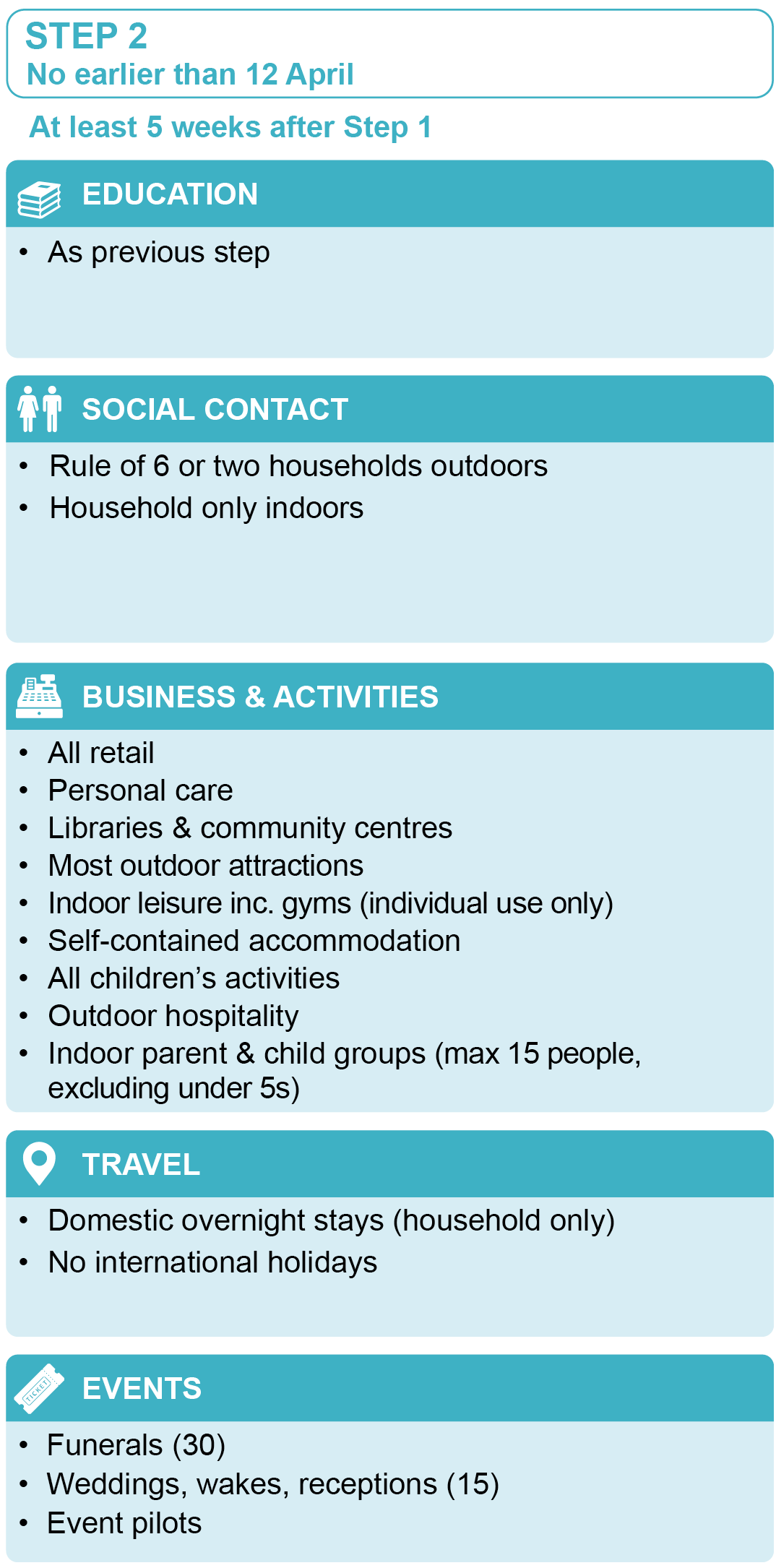
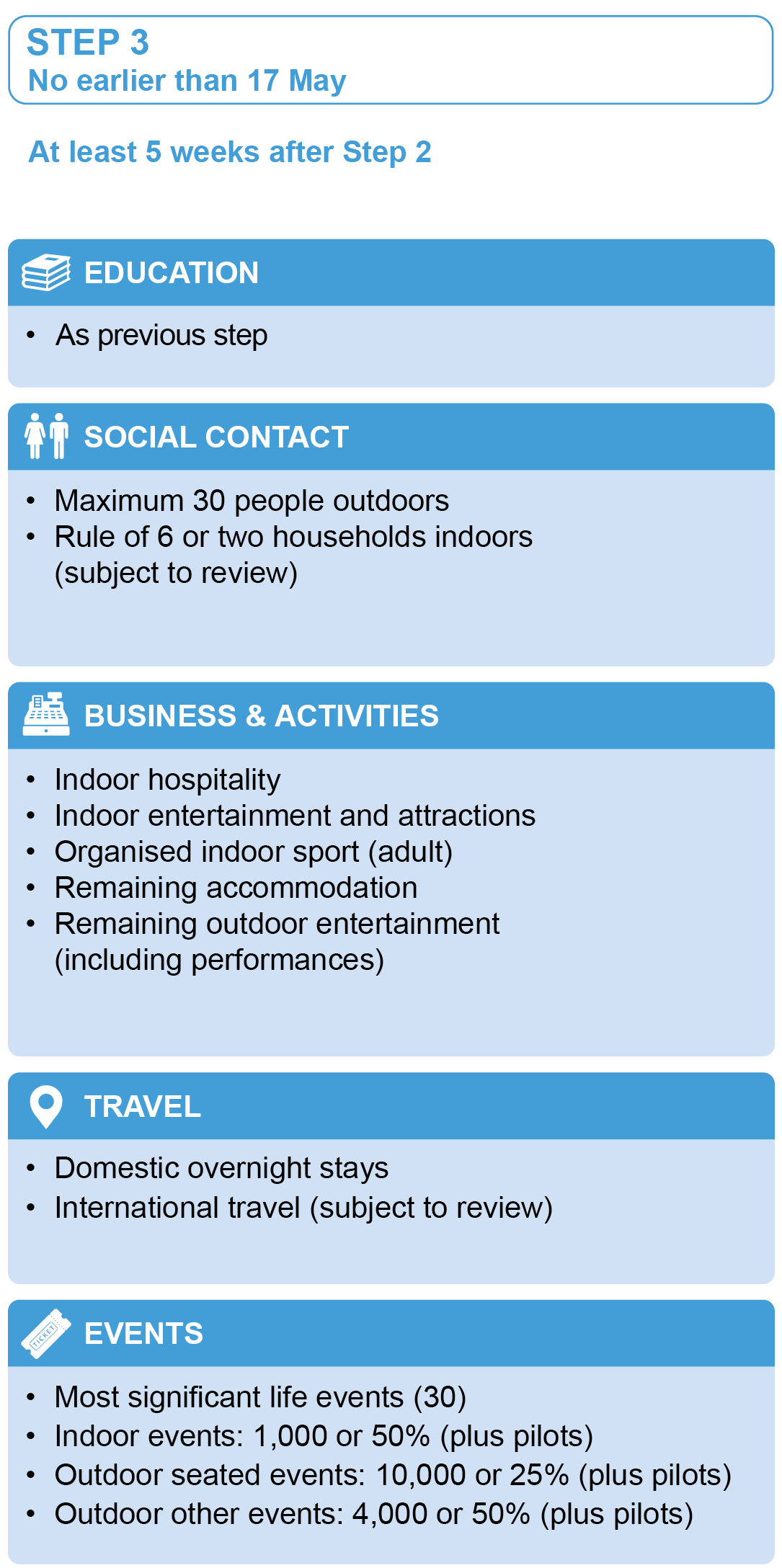
The government has started to ease the restrictions and to allow the country, step by step to start opening up.
Step 1 – 8 March
Step 2 – not before 12 April
Step 3 – not before 17 May
Step 4 – not before 21 June
Four steps forward … graphics from Public Health England
Care still needs to be applied to all work activities – whether you are preparing to re-open a place of work or to alter or extend the business services which have been offered in line with the eased restrictions.
The economy will be opening up but the coronavirus is still present and a threat to health.
If you need some practical and pragmatic Health and Safety advice to ensure your Covid-19 Secure Arrangements stay relevant and valid then contact us for an informal chat.
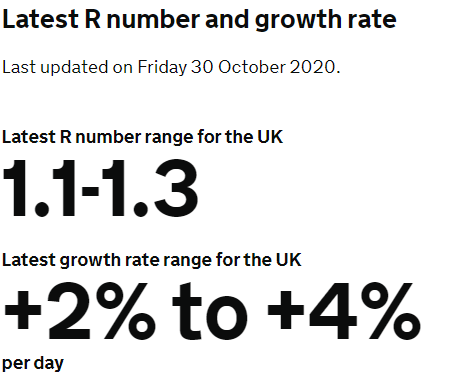
The number of coronavirus cases in the UK is increasing.
It is too early to say that the rise of cases is because ‘we’ have become too complacent, more rebellious or just de-sensitised to the pandemic but the fact is the R value has risen and it affects us all.
There are arguments raging across the political sectors but one thing that virtually every scientist agrees on is the continued need for social distancing, good hand hygiene and the wearing of masks where social distancing can’t be achieved.
Businesses also recognise that national restrictions and closures just can’t go on. Perhaps therefore the time has come to fully recognise that every business has to play its part and give “complete” compliance a real chance. Not just acting “almost” within the restrictions but doing everything we can to stop any spread of the infection within our workplaces and communities.
As always we are here to support the business community and promote a swift reduction in the case numbers and an equally swift end to the restrictions.
Stay safe – if you need guidance on your current Covid-19 Secure arrangements please contact us.