Don’t fall silent intiative

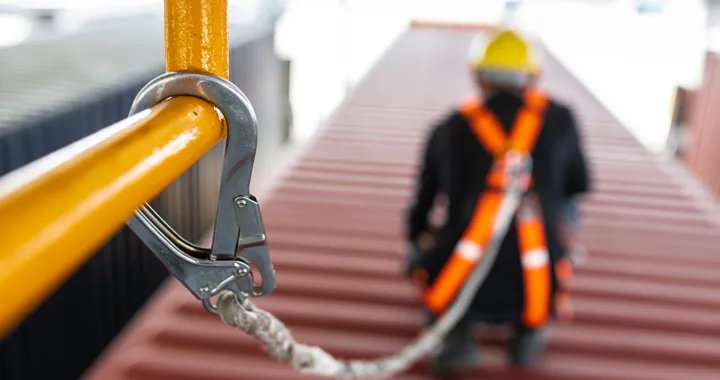
An excellent and very important initiative from IOSH: The “Don’t Fall Silent” campaign addresses a critical and persistent issue in workplace safety. The focus on prevention and cultural change is particularly vital, as falls from height remain a leading cause of workplace fatalities, as the HSE’s provisional figures sadly confirm.

Here’s a brief summary of the campaign’s key messages and why each point is so crucial:

  • Planning: This is the foundation of all safe work. IOSH’s emphasis on only working at height when “absolutely necessary” aligns with the risk hierarchy of control. The best way to prevent a fall is to eliminate the need to work at height in the first place.
  • Competence: Proper training is essential, but a key element of this is ensuring workers are not just trained but also competent and confident in applying that training. Supervision is critical to ensuring that knowledge is put into practice correctly.
  • Equipment: The campaign highlights the need for not just having the right equipment but also ensuring it’s properly maintained. A harness or a guardrail system that isn’t inspected and in good condition can be as dangerous as having no equipment at all.
  • Culture: This is arguably the most challenging and most important aspect of the campaign. A positive safety culture is one where safety is seen as a shared value, not just a set of rules. When workers feel “empowered to speak up,” it means the organization values their input and won’t penalize them for raising concerns, which is a major factor in preventing accidents.
  • Collaboration: This point recognizes that safety is a collective effort. It’s not just the employer’s responsibility. It involves contractors, designers, suppliers, and regulatory bodies all working together to share knowledge and create a safer environment for everyone.

The campaign’s title, “Don’t Fall Silent,” is a powerful call to action that resonates with the need to actively and openly address these risks rather than accepting them as an unavoidable part of high-risk work. It’s a proactive approach that is well aligned with modern health and safety management.

Summer safety

Some key pointers for worker safety during hot spells

Hydration:

Encourage your staff to drink plenty of water throughout the day, especially before, during, and after work.  However sugary or caffeinated drinks should be used sparingly as they may partially dehydrate.

Rest and Shade:

Take or schedule more frequent breaks in cooler or shaded areas – you might consider providing a welfare spot with a gazebo  for shade.  Consider whether workers are able to rotate between tasks where there is greater exposure to heat/sun if frequent breaks are more difficult to incorporate.

Appropriate Clothing:

Provide loose-fitting, light-colored, and breathable clothing. Avoid excessive layers of protective equipment when possible without lessening the protection that may be required for the tasks.

Heat Illness Awareness:

Train workers to recognize the signs and symptoms of heat-related illnesses, such as heat exhaustion and heatstroke.  Make sure that your staff and in particular first aiders know the emergency procedures.

Workplace Environment:

Ensure there is adequate ventilation in the workplace and use fans or air conditioning when possible.  Monitor your workplace temperatures and adjust the work schedules as needed.

This Napo film below has a light-hearted summary …

If you have unique challenges that you need advice on just contact us to arrange a chat.  By the way the Napo films are the property of Via Storia.

Fear of non-compliance on inspection

A survey of 2,000 individuals who work in varied roles across a range of UK sectors has found 68% of respondents feel their business/organisation would likely not comply with on-the-spot Health and Safety Executive (HSE) inspections. 

This is because they feel the business/organisation they work for doesn’t have the data to prove that its fixed and movable assets are managed and maintained to the required regulatory standards.

The article headline extract above makes a strong case to review your maintenance arrangements and record keeping.  The article is rather skewed towards digital asset management records, but the question stands – is your firm prepared to be inspected and would it be compliant?

If you are in doubt about your legal duties and responsibilities (such as suitability, maintenance, inspection, information and training…) then why not drop us a line.  Happy to provide pragmatic no-nonsense advice on an ad-hoc or retained basis.

Heading for a Fall

The HSE have published the annual statistics for 2022-23 and there are some stark reminders that people are still suffering injuries or worse in the workplace.

For those of us that work hard to protect people at work one fact really stands out:

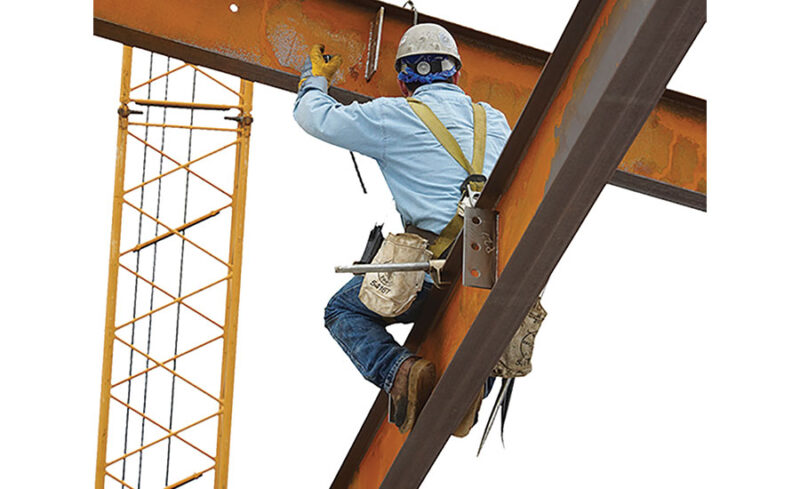
“Just three different accident kinds accounted for 60% of the fatal injuries to workers over the last five years. Falls from a height, being struck by moving vehicle and being struck by a moving, including flying/falling, object continue as the three main causes of fatal injury…”

It’s a sobering thought and hopefully one that will get us all looking at the hazards in our workplaces to ensure they are eliminated or properly mitigated.

So, what can you do NOW?

Let everyone in your workplace knows that accidents can and do happen – use the HSE facts to re-enforce your message.

Involve your teams in recognising the hazards  –  use the HSE facts as a prompt for an immediate, practical assessment.

Reconsider if you can eliminate any of the hazards in your workplace.

If you can’t, check your risk assessments are up to date and the safety measures in them are working in practice.

Creating a safe working environment doesn’t just prevent the shock and resulting trauma of an accident for the person concerned it also protects everyone else in your workplace.

It also contributes to a safer work force across the country, which ultimately saves time and money:

“35.2 million working days lost due to work-related illness and workplace injury.  £20.7 billion estimated cost of injuries and ill health from current working conditions.”

Beat the statistics, nurture your work force

Nearly one million workers in Britain suffer from stress, depression, and anxiety.

These are the latest statistics from the Health and Safety Executive (HSE). The figures from the workplace regulator show there were an estimated 914,000 cases of work-related stress, depression, or anxiety in 2021/22 and an estimated 17 million working days lost.

DO SOMETHING NOW

More than ever employers need to ensure that there are up to date arrangements in place to support their employees’ well-being.

JUST THE LATEST FAD!

It’s been a tough few years and mental health seems to be the latest “buzz” word. It’s tempting to ignore it and hope it goes away.

For small businesses making new arrangements around mental health may seem onerous and a little “new age”. However it is not only the “right” thing to do, morally and legally, it actually makes good business sense.

A recent survey from Deloitte suggests the total annual cost of poor mental health to employers has increased by 25% since 2019, costing UK employers up to £56 billion a year. Deloitte’s findings also suggest that UK bosses will receive an average return of £5 for every £1 spent on mental health.

GOOD NEWS

The good news is there are some great resources to help employers comply with their legal duties around mental health.

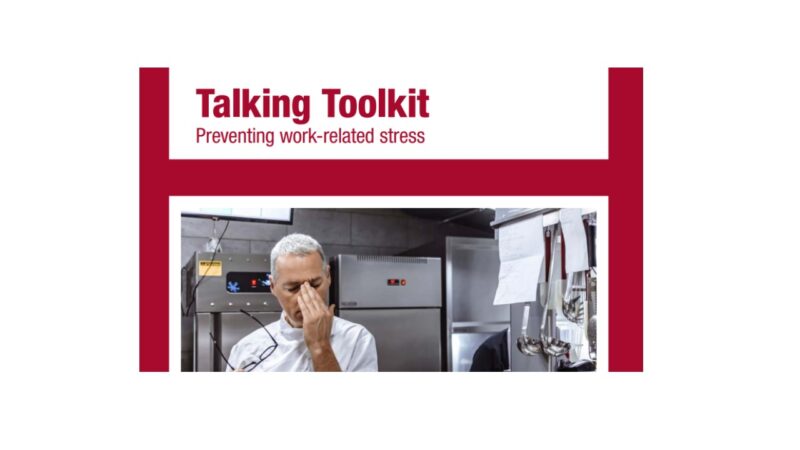
The HSE has created a Talking Toolkit to assist employers in speaking to their employees and taking the important first step towards preventing work-related stress and developing the actions and stress risk assessment employers need to comply with the law.

Talking Toolkit: Preventing work-related stress (hse.gov.uk)

By law employers need to assess the risk of work-related stress and to put steps in place to tackle those risks. This can also reduce sickness absence, boost morale and therefore help improve productivity.

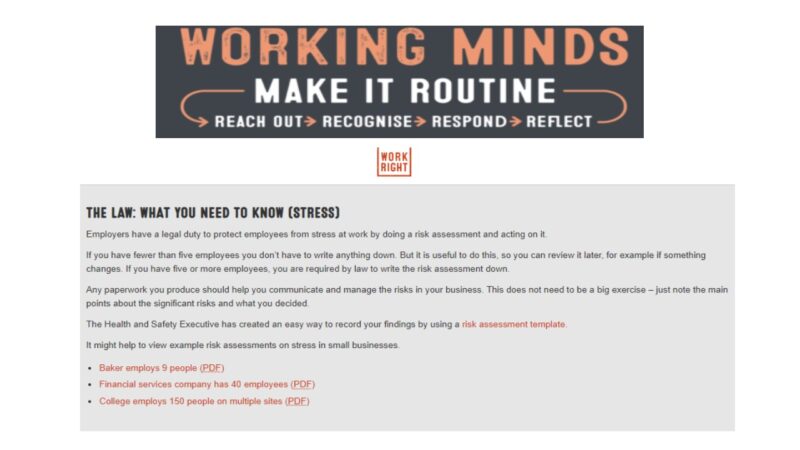
Work Right is a campaign by the Health & Safety Executive aimed at helping smaller businesses and workers. The Working Minds section offers a range of tools and support to help businesses and workers understand the best ways to prevent work related stress and encourage good mental health. Check out the helpful sample risk assessments. Click below:

Simple steps can make a huge difference to someone’s working life, and we spend a huge proportion of our lives at work…

Directors’ duties ACoP – Singapore

A senior government minister in Singapore has issued a warning to company directors that they face prosecution for health and safety failures, as the government considers a new Approved Code of Practice (ACoP) on directors’ duties.

IOSH News

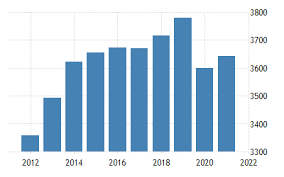
A spike in recent worker deaths in Singapore (31 in the first seven months of this year) will lead to government considering the imposition of a code of practice on company directors. Singapore’s working population is approx 3.6m and the death rate per 100,000 would be 0.83 were there to be no more this year.

Compare this with the current reducing trend of work related fatalities in the UK which was 0.41 for the previous year.

Does this mean that the UK health and safety regime and the duties of UK directors is about right?

If you wish to discuss whether or not your company is getting it right, please get in touch for a no-nonsense preagmatic chat.

Coronavirus has not ‘gone away’ …

Government advice was changed on 1 April 2022:

As we learn to live safely with coronavirus (COVID-19), there are actions we can all take to help reduce the risk of catching COVID-19 and passing it on to others. These actions will also help to reduce the spread of other respiratory infections, such as flu, which can spread easily and may cause serious illness in some people.

COVID-19, along with many other respiratory infections such as influenza (flu), can spread easily and cause serious illness in some people. You may be infected with a respiratory virus such as COVID-19 and not have any symptoms but still pass infection onto others.

The risk of catching or passing on COVID-19 is greatest when someone who is infected is physically close to, or sharing an enclosed and/or poorly ventilated space with, other people. When someone with a respiratory viral infection such as COVID-19 breathes, speaks, coughs or sneezes, they release small particles that contain the virus which causes the infection. These particles can be breathed in or can come into contact with the eyes, nose, or mouth. The particles can also land on surfaces and be passed from person to person via touch.

You will not always know whether someone you come into contact with is at higher risk of becoming seriously ill from respiratory infections, including COVID-19. They could be strangers (for example people you sit next to on public transport) or people you may have regular contact with (for example friends and work colleagues).

There are simple things you can do in your daily life that will help reduce the spread of COVID-19 and other respiratory infections and protect those at highest risk. Things you can choose to do are:

  1. Get vaccinated.
  2. Let fresh air in if meeting others indoors.
  3. Practise good hygiene:
    • wash your hands
    • cover your coughs and sneezes
    • clean your surroundings frequently
  4. Wear a face covering or a face mask.

Face coverings and face masks can help reduce the chance of you spreading infection to others, especially in crowded and enclosed spaces, and may protect you from becoming infected by some respiratory viruses.

If you have symptoms of a respiratory infection, such as COVID-19, and you have a high temperature or do not feel well enough to go to work or carry out normal activities, you are advised to try to stay at home and avoid contact with other people.

Covid-19 hasn’t gone away!

Many people now go about their day-to-day business as if Coronavirus is no longer a problem.

Many of us may be fully vaccinated (and some of us boosted as well) however, as the case rates fall and then rise parts of Europe are needing to re-introduce lockdowns. It is clear though that the continued high case rate in the UK means there is still a significant risk here. You can see this clearly on the chart below.

So please make sure your business doesn’t sucumb to CC (Covid Complacency) by remaining aware of the hazard of infection and transmission. Recognising the risk means we can continue to take sensible and pragmatic precautions as individuals such as good personal hygiene, face covering wear, ventilation and occasional testing.

The current legal requirements for business to comply with are quite limited and available from government. We are happy to advise on appropriate control measures for your particular business to help keep your employees and contractors safe and covid secure in the current climate where the risk remains significant and government takes a very light touch approach.

If you need advice on how to do so, please get in touch with us.

Accidents on the rise and they cost

… in pain and misery for those who are injured and to businesses and the economy. 

There was a decrease in the number of workers killed at work – down to 111 for 2019/2020 – but worryingly this figure has climbed again to 142 for the 12 months ending in March of this year. It is quite possible that due to the focus on Covid-19 arrangements and some time away on furlough that day-to-day safety practices may have lapsed.

On a brighter note, the UK still has the lowest rates of fatal work -related injuries in Europe. 

In monetary terms the annual cost of all this work-related injury and ill heath was £16,200,000,000 about the cost of five new aircraft carriers. 

Given these figures it must make sense for every business to make a modest financial investment into the health and safety of their employees.

Funding sensible and proportionate measures to keep workers and others affected by your work safe will produce dividends in the form of reduced incident rates, healthier workers and compliance with the law. 

Don’t be complacent when it comes to your workplace health and safety.  Contact us if you would like straight-talking pragmatic safety advice.

Take a look at the summary of the 2020 statistics from the HSE.  See their PDF here. We will update with 2021 figures when they are available.

COVID-19 Official UK Guidance

Guidance from Public Health England and Department for Business, Energy & Industrial Strategy for employers and business

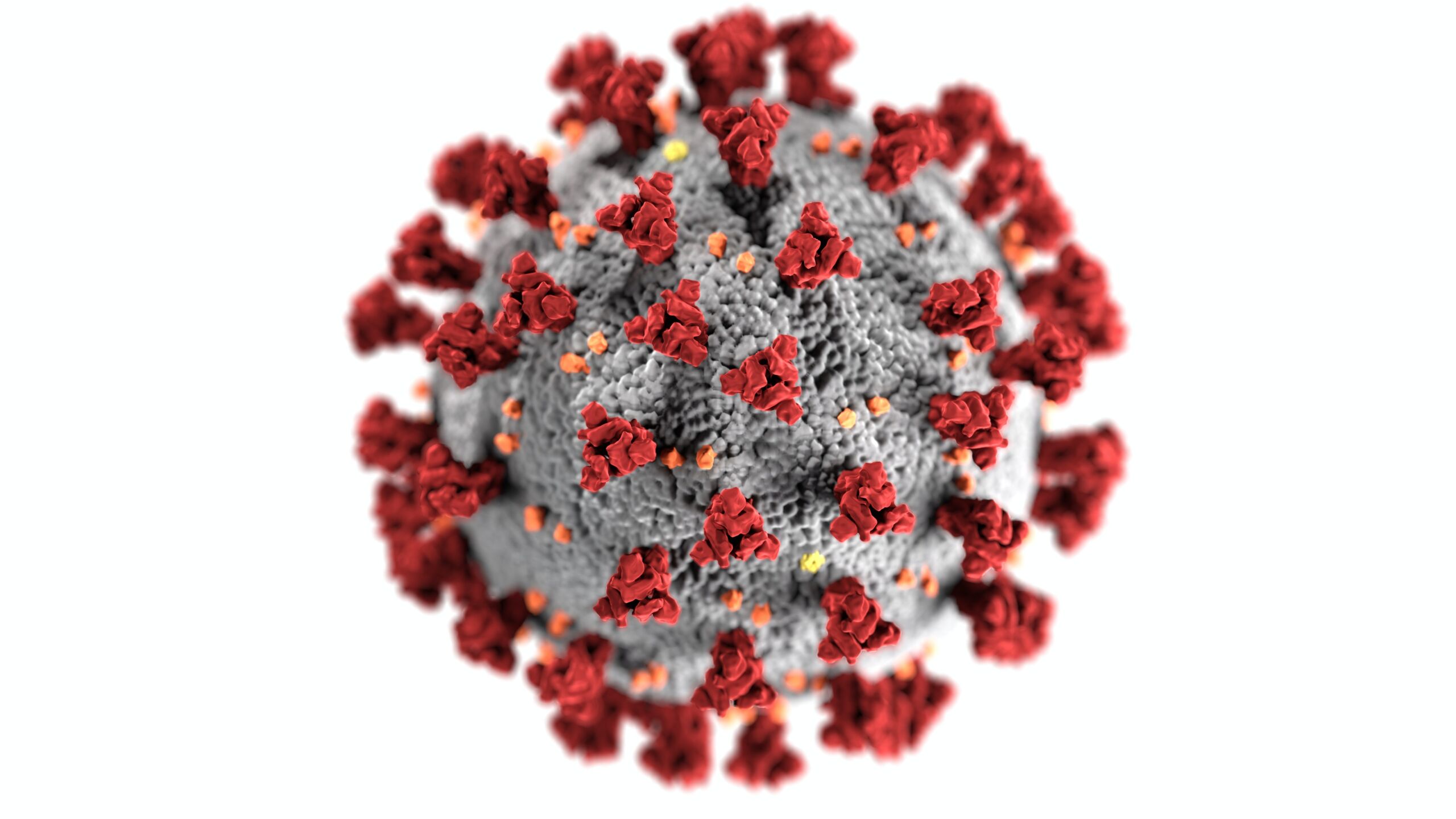
A coronavirus is a type of virus. As a group, coronaviruses are common across the world. COVID-19 is a new strain of coronavirus first identified in Wuhan City, China in January 2020.

The incubation period of COVID-19 is between 2 to 14 days. This means that if a person remains well 14 days after contact with someone with confirmed coronavirus, they have not been infected.

Signs and symptoms of COVID-19

The following symptoms may develop in the 14 days after exposure to someone who has COVID-19 infection:

  • cough
  • difficulty in breathing
  • fever

Generally, these infections can cause more severe symptoms in people with weakened immune systems, older people, and those with long-term conditions like diabetes, cancer and chronic lung disease.

How COVID-19 is spread

From what we know about other coronaviruses, spread of COVID-19 is most likely to happen when there is close contact (within 2 metres or less) with an infected person. It is likely that the risk increases the longer someone has close contact with an infected person.

Respiratory secretions produced when an infected person coughs or sneezes containing the virus are most likely to be the main means of transmission.

There are 2 main routes by which people can spread COVID-19:

  • infection can be spread to people who are nearby (within 2 metres) or possibly could be inhaled into the lungs.
  • it is also possible that someone may become infected by touching a surface, object or the hand of an infected person that has been contaminated with respiratory secretions and then touching their own mouth, nose, or eyes (such as touching door knob or shaking hands then touching own face)

There is currently little evidence that people who are without symptoms are infectious to others.

Preventing spread of infection

There is currently no vaccine to prevent COVID-19. The best way to prevent infection is to avoid being exposed to the virus.

Public Health England (PHE) recommends that the following general cold and flu precautions are taken to help prevent people from catching and spreading COVID-19:

  • cover your mouth and nose with a tissue or your sleeve (not your hands) when you cough or sneeze. See Catch it, Bin it, Kill it
  • put used tissues in the bin straight away
  • wash your hands with soap and water often – use hand sanitiser gel if soap and water are not available. See hand washing guidance
  • try to avoid close contact with people who are unwell
  • clean and disinfect frequently touched objects and surfaces
  • do not touch your eyes, nose or mouth if your hands are not clean

If you are worried about symptoms, please call NHS 111. Do not go directly to your GP or other healthcare environment.

Further information is available on the PHE blog and NHS.UK.

Face masks for the general public are not recommended to protect from infection, as there is no evidence of benefit from their use outside healthcare environments.

People who have returned from Hubei Province, including Wuhan, in the last 14 days should self-isolate whether they have symptoms or not. This includes avoiding attending an education setting or work until 14 days after they leave Hubei Province.

People who have returned from Hubei Province, including Wuhan, in the last 14 days should avoid attending work. They should call NHS 111 for advice and self-isolate

Advice is in place for what to do if you have returned in the last 14 days from specified countries or areas which is being updated on an ongoing basis.

With regards to travel information to China or other countries for individuals working in the UK, we recommend following the Foreign and Commonwealth Office (FCO) country advice pages.

At present, FCO advises against all travel to Hubei Province due to the ongoing novel COVID-19 outbreak. The FCO also advises against all but essential travel to the rest of mainland China (not including Hong Kong and Macao).

How long the virus can survive

How long any respiratory virus survives will depend on a number of factors, for example:

  • what surface the virus is on
  • whether it is exposed to sunlight
  • differences in temperature and humidity
  • exposure to cleaning products

Under most circumstances, the amount of infectious virus on any contaminated surfaces is likely to have decreased significantly by 72 hours.

We know that similar viruses are transferred to and by people’s hands. Therefore, regular hand hygiene and cleaning of frequently touched surfaces will help to reduce the risk of infection.

See hand washing guidance.

Guidance on facemasks

Employees are not recommended to wear facemasks (also known as surgical masks or respirators) to protect against the virus. Facemasks are only recommended to be worn by symptomatic individuals (advised by a healthcare worker) to reduce the risk of transmitting the infection to other people.

PHE recommends that the best way to reduce any risk of infection is good hygiene and avoiding direct or close contact (closer than 2 metres) with any potentially infected person.

Any member of staff who deals with members of the public from behind a full screen will be protected from airborne particles.

What to do if an employee or a member of the public becomes unwell and believe they have been exposed to COVID-19

If the person has not been to specified areas in the last 14 days, then normal practice should continue.

If someone becomes unwell in the workplace and has travelled to China or other affected countries, the unwell person should be removed to an area which is at least 2 metres away from other people. If possible find a room or area where they can be isolated behind a closed door, such as a staff office. If it is possible to open a window, do so for ventilation.

The individual who is unwell should call NHS 111 from their mobile, or 999 if an emergency (if they are seriously ill or injured or their life is at risk) and explain which country they have returned from in the last 14 days and outline their current symptoms.

Whilst they wait for advice from NHS 111 or an ambulance to arrive, they should remain at least 2 metres from other people. They should avoid touching people, surfaces and objects and be advised to cover their mouth and nose with a disposable tissue when they cough or sneeze and put the tissue in a bag or pocket then throw the tissue in the bin. If they don’t have any tissues available, they should cough and sneeze into the crook of their elbow.

If they need to go to the bathroom whilst waiting for medical assistance, they should use a separate bathroom if available.

Returning from travel overseas to affected areas

People who have returned from Hubei Province, including Wuhan, in the last 14 days should avoid attending work. They should call NHS 111 for advice and self-isolate

Advice is in place for what to do if you have returned in the last 14 days from specified countries or areas which is being updated on an ongoing basis.

All other staff should continue to attend work.

What to do if a member of staff or the public with suspected COVID-19 has recently been in your workplace

For contacts of a suspected case in the workplace, no restrictions or special control measures are required while laboratory test results for COVID19 are awaited. In particular, there is no need to close the workplace or send other staff home at this point. Most possible cases turn out to be negative. Therefore, until the outcome of test results is known there is no action that the workplace needs to take.

What to do if a member of staff or the public with confirmed COVID-19 has recently been in your workplace

Closure of the workplace is not recommended.

The management team of the office or workplace will be contacted by the PHE local Health Protection Team to discuss the case, identify people who have been in contact with them and advise on any actions or precautions that should be taken.

A risk assessment of each setting will be undertaken by the Health Protection Team with the lead responsible person. Advice on the management of staff and members of the public will be based on this assessment.

The Health Protection Team will also be in contact with the case directly to advise on isolation and identifying other contacts and will be in touch with any contacts of the case to provide them with appropriate advice.

Advice on cleaning of communal areas such as offices or toilets will be given by the Health Protection Team. and is outlined later in this document.

When individuals in the workplace have had contact with a confirmed case of COVID-19

If a confirmed case is identified in your workplace, the local Health Protection Team will provide the relevant staff with advice. These staff include:

  • any employee in close face-to-face or touching contact
  • talking with or being coughed on for any length of time while the employee was symptomatic
  • anyone who has cleaned up any bodily fluids
  • close friendship groups or workgroups
  • any employee living in the same household as a confirmed case

Contacts are not considered cases and if they are well they are very unlikely to have spread the infection to others:

  • those who have had close contact will be asked to self-isolate at home for 14 days from the last time they had contact with the confirmed case and follow the home isolation advice sheet
  • they will be actively followed up by the Health Protection Team
  • if they develop new symptoms or their existing symptoms worsen within their 14-day observation period they should call NHS 111 for reassessment
  • if they become unwell with cough, fever or shortness of breath they will be tested for COVID-19
  • if they are unwell at any time within their 14-day observation period and they test positive for COVID-19 they will become a confirmed case and will be treated for the infection

Staff who have not had close contact with the original confirmed case do not need to take any precautions and can continue to attend work.

Certifying absence from work

By law, medical evidence is not required for the first 7 days of sickness. After 7 days, it is for the employer to determine what evidence they require, if any, from the employee. This does not need to be fit note (Med 3 form) issued by a GP or other doctor.

Your employee will be advised to isolate themselves and not to work in contact with other people by NHS 111 or PHE if they are a carrier of, or have been in contact with, an infectious or contagious disease, such as COVID-19.

We strongly suggest that employers use their discretion around the need for medical evidence for a period of absence where an employee is advised to self-isolate due to suspected COVID-19, in accordance with the public health advice being issued by the government.

Advice for staff returning from travel anywhere else in the world within the last 14 days

Currently, there are minimal cases outside the listed areas and therefore the likelihood of an individual coming into contact with a confirmed case is extremely low.

These staff can continue to attend work unless they have been informed that they have had contact with a confirmed case of COVID-19

If individuals are aware that they have had close contact with a confirmed case of COVID-19 they should contact NHS 111 for further advice.

The latest country information is available on the NaTHNac Travel Pro website.

Handling post, packages or food from affected areas

Employees should continue to follow existing risk assessments and safe systems of work. There is no perceived increase in risk for handling post or freight from specified areas.

Cleaning offices and public spaces where there are suspected or confirmed cases of COVID-19

Coronavirus symptoms are similar to a flu-like illness and include cough, fever, or shortness of breath. Once symptomatic, all surfaces that the person has come into contact with must be cleaned including:

  • all surfaces and objects which are visibly contaminated with body fluids
  • all potentially contaminated high-contact areas such as toilets, door handles, telephones

Public areas where a symptomatic individual has passed through and spent minimal time in (such as corridors) but which are not visibly contaminated with body fluids do not need to be specially cleaned and disinfected.

If a person becomes ill in a shared space, these should be cleaned using disposable cloths and household detergents, according to current recommended workplace legislation and practice.

Rubbish disposal, including tissues

All waste that has been in contact with the individual, including used tissues, and masks if used, should be put in a plastic rubbish bag and tied when full. The plastic bag should then be placed in a second bin bag and tied. It should be put in a safe place and marked for storage until the result is available. If the individual tests negative, this can be put in the normal waste.

Should the individual test positive, you will be instructed what to do with the waste.