Only one month to go…

What’s the future for the Adventure Activities Licensing Authority (AALA)?

Be part of the consultation process…

The Health and Safety Executive (HSE) is reviewing the delivery and scope of the Adventure Activities Licensing Authority (AALA) on behalf of Department for Work and Pensions (DWP).

The scope of the review aims to ensure that the provision of licencing of adventure activities is delivered in a sensible, proportionate and cost-effective manner, and encourages the participation by young people in adventure activities.

The Adventure Activities Licensing Authority (AALA) was established through the Activity Centres (Young Persons’ Safety) Act 1995. It came into existence in April 1996 following the death of four young people during a kayaking activity in Lyme Bay in 1993.

Adventure Activities Licensing legislation is entirely separate from and additional to health and safety at work law, but the criteria by which adventure activities providers are assessed is the same as that required under health and safety at work law.

The aim of adventure activities licensing was to provide assurance to the public about the safety of those activity providers who have been granted a licence. In this way it was expected that young people would be able to enjoy exciting and stimulating activities outdoors without being exposed to avoidable risks of death or disabling injury.

A licence indicates that the provider has been inspected by the AALS on behalf of the AALA. The provider’s safety management systems for young people is reviewed and the provider has to demonstrate compliance with nationally accepted standards of good practice in the delivery of adventure activities to young people, with due regard to the benefits and risks of taking part in the activity.

The Adventure Activities Licensing scheme covers young people under the age of 18 and applies to paid provision of four categories of adventure activities: caving, climbing, some water-sports and some trekking.

Currently it does not cover activities provided by schools to their own pupils where the Health and Safety at Work etc. 1974 Act still applies. Nor does it apply to activities provided by voluntary associations to their own members, or young people accompanied by their parents or legal guardians.

So, why is the Adventure Activities Licensing Authority being reviewed?

In 2010, Lord Young’s report ‘Common Sense, Common Safety’ was published. The report looked at the operation of health and safety laws and the growth of the compensation culture in Great Britain, recommended that the AALA be abolished.

The report stated that the licensing regime was a cost and burden on business that added little to the health and safety of young people undertaking adventure activities. It added that the HSE believed that effective enforcement of the requirements of the Health and Safety at Work etc Act 1974 and the Management of Health and Safety at Work Regulations 1999 was sufficient. It went on to point out that the licensing regime was narrowly focused on a limited number of outdoor activities and did not reflect the wide range of adventure activities now available.

Lord Young believed that the running costs of the scheme; circa £750,000 and the cost of a licence of £715 seemed to be a disincentive to new entrants to the adventure activity market, especially to small companies.

The report recommended that with abolition of the scheme, a code of practice be introduced, overseen and monitored by HSE. He also stated that removal of licensing would allow businesses to make financial savings and focus on management of the whole range of available activities. In addition, there would be savings associated with the dismantling of the licensing regime.

A consultation was carried out, but, Lord Young’s recommendation was not implemented as Ministers decided at the time that there was still a place for a licensing scheme. It was felt that the scheme should be taken out of HSE control, but in autumn 2016 after a period of uncertainty it was agreed by Government that AALA should remain with HSE, due to the complex nature of the legislation. It was agreed that the service should be reviewed to ensure it was fit for purpose going forward.

What’s the future?

Briefly there are three options which are being consulted upon:

Option 1 – Retain the AALR regulations and current licensing scheme underpinned by the Health and Safety at Work etc. Act 1974, and increase fees
Option 2 Retain the AALR regulations and current licensing scheme underpinned by the Health and Safety at Work etc Act 1974, and increase fees and extend the activities in-scope
Option 3 Removal of the AALR regulations and move to an industry-led; not-for-profit accreditation scheme underpinned by the Health and Safety at Work etc. Act 1974, to provide assurance to users of outdoor activities

If you want to have your say you only have until 9 March 2018

Go to

CD286 – Review of the Adventure Activities Licensing Authority (AALA)

Download the full discussion document and respond! Act now to make your opinion count…
UK safety fines rose 80%

… according to Health and Safety Executive’s (HSE) injury and ill health statistics

A scary headline to make any boss take a long, hard look at Health and Safety arrangements in their company or organisation…

In 2016-17 – the first full year that the new sentencing guidelines for safety and health offences were in place – fines reached £69.9m compared with £38.8m for the same period a year earlier.

But it’s not all bad news. Whilst the fines handed to dutyholders found guilty of safety and health offences increased by 80% in the 12 months to the end of March 2017 there was a fall in the number of cases prosecuted.

Under the new guidelines, the level of fine corresponds to the offending organisation’s turnover. If convicted of a safety and health offence, large organisations that turn over more than £50m and fall into the “very high” culpability category could be fined up to £10m.

The HSE and local authorities also issued 11,913 enforcement notices in 2016-17, a 5% increase compared with the previous period when 11,380 were served.

It’s really good to see the number of cases prosecuted falling but we continue to urge everyone to make sure they avoid complacency in the workplace.

We are always happy to arrange an “anti-complacency” visit to your business or organisation, working with you to ensure all of your Health and Safety arrangements are in place and, more importantly, are working…

Helping to keep national computer gaming festivals safe

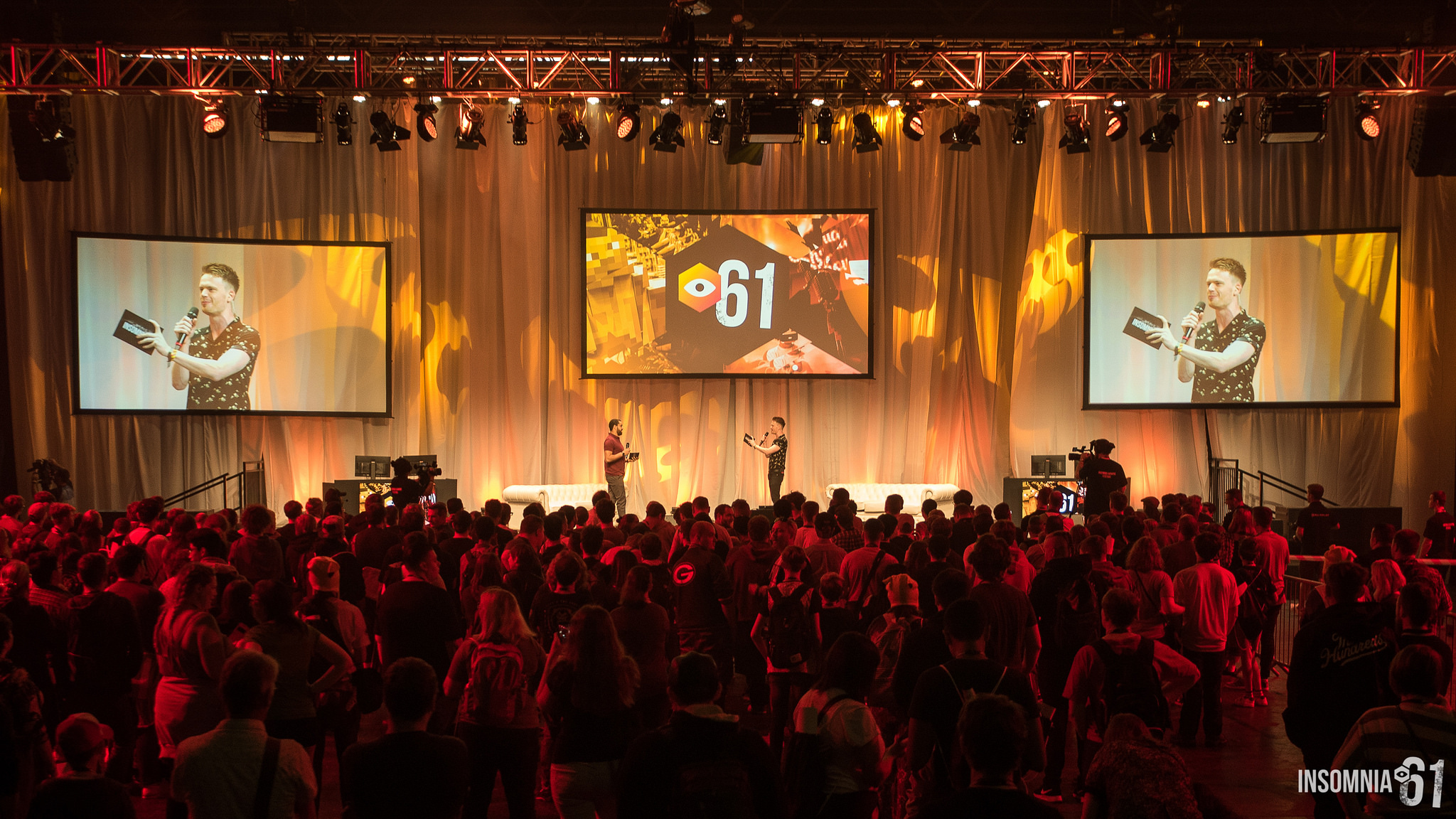
We are delighted to have been appointed Health and Safety contractor to some of the UK’s biggest computer gaming festivals.

SoPro Safety Ltd will advise Multiplay UK Ltd, a subsidiary of Game, on event health and safety for Insomnia, Brick Live and games publisher conventions such as Minecon. Event venues include Birmingham’s NEC, London’s Excel and Belfast’s Titanic Exhibition Centre. The increasingly popular shows attract up to 50,000 consumers, many of them families and young people.

SoPro Safety is headed by Jon Sullivan, an experienced Health and Safety professional whose previous event work has included venues at the 2012 Olympic Games and the Commonwealth Games in Glasgow, International art shows in London and World Skills, International.

As well as event work SoPro Safety offers a full compliance, advice and outsource service for Health and Safety as well as a number of unique, dynamic training courses.

Commenting on the appointment Multiplay UK Ltd’s Events Director, Andrew Smith said “We are delighted to have Jon Sullivan, and SoPro Safety, on board. Their experience of events coupled with an extensive knowledge of Health and Safety is invaluable to Multiplay. Jon Sullivan manages the implementation of our Health and Safety in a professional and pragmatic manner, enabling our team to work safely and offer a low risk environment to our visitors”.

New regulations to include Events and Exhibitions

The new Construction (Design and Management) Regulations 2015 (CDM Regs) come into force in April.  Events and exhibitions of scale will fall within the scope of these regulations and the HSE is drafting guidance specifically for the events industry.  The draft regulations have been published, however the exact impact on our events and exhibitions industry is still taking shape.

We expect there to be better formalisation of the responsibilities of the client and their appointed organisers and/or main contractors.  For well run projects this should be a fairly simple matter to comply…

From the HSE:

The new CDM Regs come into force on 6 April 2015 and apply to all building and construction projects, regardless of the size, duration and nature of the work.

The main changes, outlined in general by the Health & Safety Executive, are as follows:

  • Principal designer. The replacement of CDM co-ordinator (under CDM 2007) by principal designer. This means that the responsibility for  coordination of the pre-construction phase – which is crucial to the management of any successful construction project – will rest with an existing member of the design team. 
  • Client. The new Regulations recognise the influence and importance of the client as the head of the supply chain and as the party best placed to set standards throughout a project 
  • Competence. By splitting ‘competence’ into its component parts of skills, knowledge, training and experience, and  – if they are an organisation – organisational capability, provides clarity for the industry to assess and demonstrate that construction project teams have the right attributes to deliver a healthy and safe project. 
  • The technical standards set out in Part 4 remain essentially unchanged from CDM 2007 and HSE’s targeting and enforcement policy, as a proportionate and modern regulator, also remains unchanged.

The Regulatory package

The new proposed Regulations and supporting guidance are all in draft form before they come into force and may be subject to changes. They offer duty holders the opportunity to familiarise themselves with the main requirements before they come into force.

Health and Safety update

We recently gained a fascinating insight into the current and probable changes that are taking place with health and safety legislation and the work of the Health and Safety Executive.

Suffice to say with their budget being cut by the order of a third that the effect is best summed up as – fewer inspections, increased costs from interventions, jailing of senior management in prosecuted cases and higher profile/higher value prosecutions.

As an indication we understand that the HSE’s budget for FFI was about £30m – they only recovered a third of this so expect bigger fines to be levied. The FFI initiative is here to stay and may extend to local authority departments to engage in the interventions. The average fee for intervention was billed as approximately £490 but one case lead to a fee of £21,000.

Food for thought.

If you wish to talk about what it might mean for you please contact us.

Glasgow 2014

Billed as the safest Games ever delivered – the XX Commonwealth Games.2014-08-06 23.48.25

Jon Sullivan had the pleasure of working with the Trivandi team supporting the Organising Committee to provide assurance and safety advice to the venues in the challenging time of Bump-In, Games Time, Bump-Out and the start of Re-Instatement and hand back to the Principle Contractor in the city.

The venue Jon worked on was the Scotstoun Sports Campus which was the most complex Glasgow venue – being a training venue for Triathlon and athletics from 13 July, plus a competition venue for Squash and table Tennis for the whole 11 days of the Games from 24 July to 3 August.  The site’s unique feature was a purpose-built, all glass squash court with arena seating within a temporary demountable structure.